
Case study
The NYX giant inflatable duck: a real inflatable, a CGI landing and a QR code
How we built a NYX campaign around a giant inflatable duck: a real inflatable on the street, a CGI film of it flown in by helicopter, and a QR code linking both.
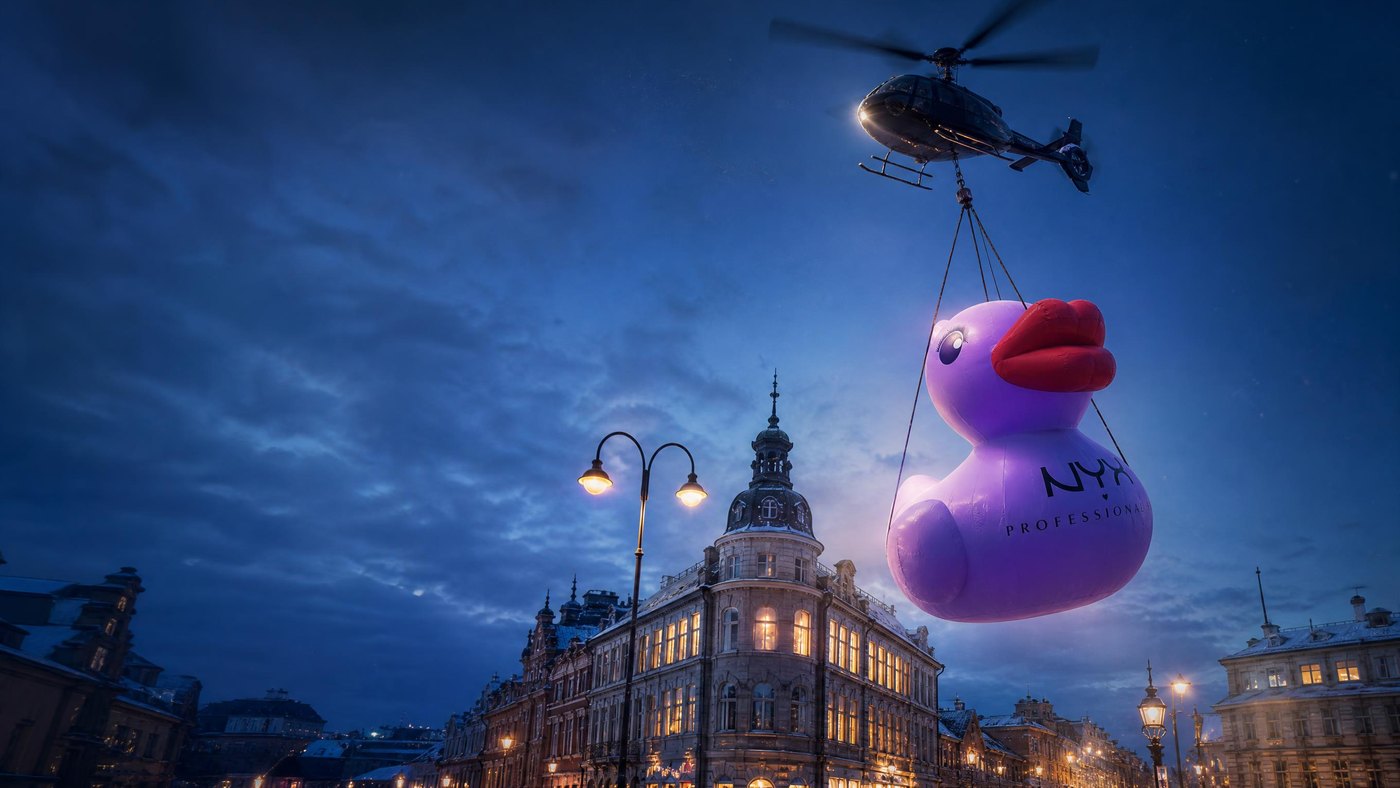
A giant lilac duck with glossy red lips, parked on a shopping street. For NYX Professional Makeup we built a whole campaign around one object: a real inflatable duck people could walk up to, a CGI film of the same duck being flown in over the city, and a QR code that joined the two.
The idea: duck lips, taken literally
The launch was a new extreme plumping lip gloss, and the packaging already spoke the language: rubber ducks, full lips and a warning to get ready for duck lips. So the hero became a giant rubber duck in NYX lilac with big red lips. It reads from across a street, it makes people smile, and it is the product promise in a single shape.
A real inflatable on the street
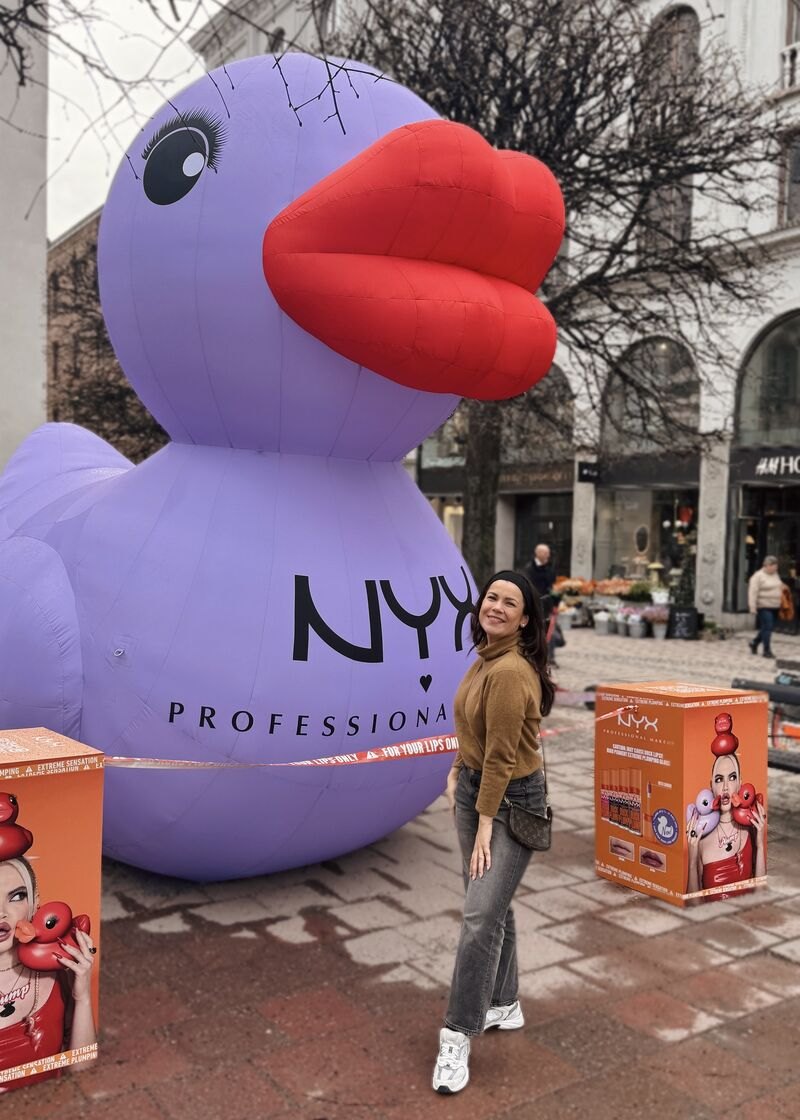
The duck was built as a real inflatable and set up in a busy pedestrian area, next to NYX display cubes with the gloss, so people could stand under it, take photos and see the product in the same moment. Inflatables are fast to install, light to move and impossible to miss, which is why they suit a short launch window so well.
The CGI film: flown in by helicopter
The inflatable could stand in one spot. The film could make it arrive. Our motion designers combined real street footage with a CGI duck carried in by a helicopter, swinging on its cables over the traffic as people stop to film it: real location, real light, one impossible moment. That film is the part that travels on social, far beyond the people who stood next to the real duck.
The QR code: from the street to the film
Why the real and the CGI duck work together
The inflatable gives a campaign something real: photos, crowds and people tagging the brand. The CGI version gives it reach: the duck can land in any city, in any format, without building anything else. The QR code ties them together, so the audience moves from one to the other on its own.
The duck flown in by helicopter, in mixed reality
A giant inflatable on the street, next to the product
Scan the duck, watch it land, share both
Planning an inflatable and CGI campaign
Start from one 3D model. It is the reference for building the inflatable and the asset for every CGI film, so the object on the street and the object in the film match exactly. Pick the installation site and the film shots together, put a QR code on everything physical, and have the films finished before the inflatable goes up. Our inflatable installations page covers how we design, build and film them.
More to read
Keep reading.
 How to choose a CGI studio (and what to ask before you sign)
Every CGI studio's reel looks good at reel speed. Here is how to tell which one will actually deliver your product film: the questions to ask, the files to request, the red flags, and what a fair quote should contain.
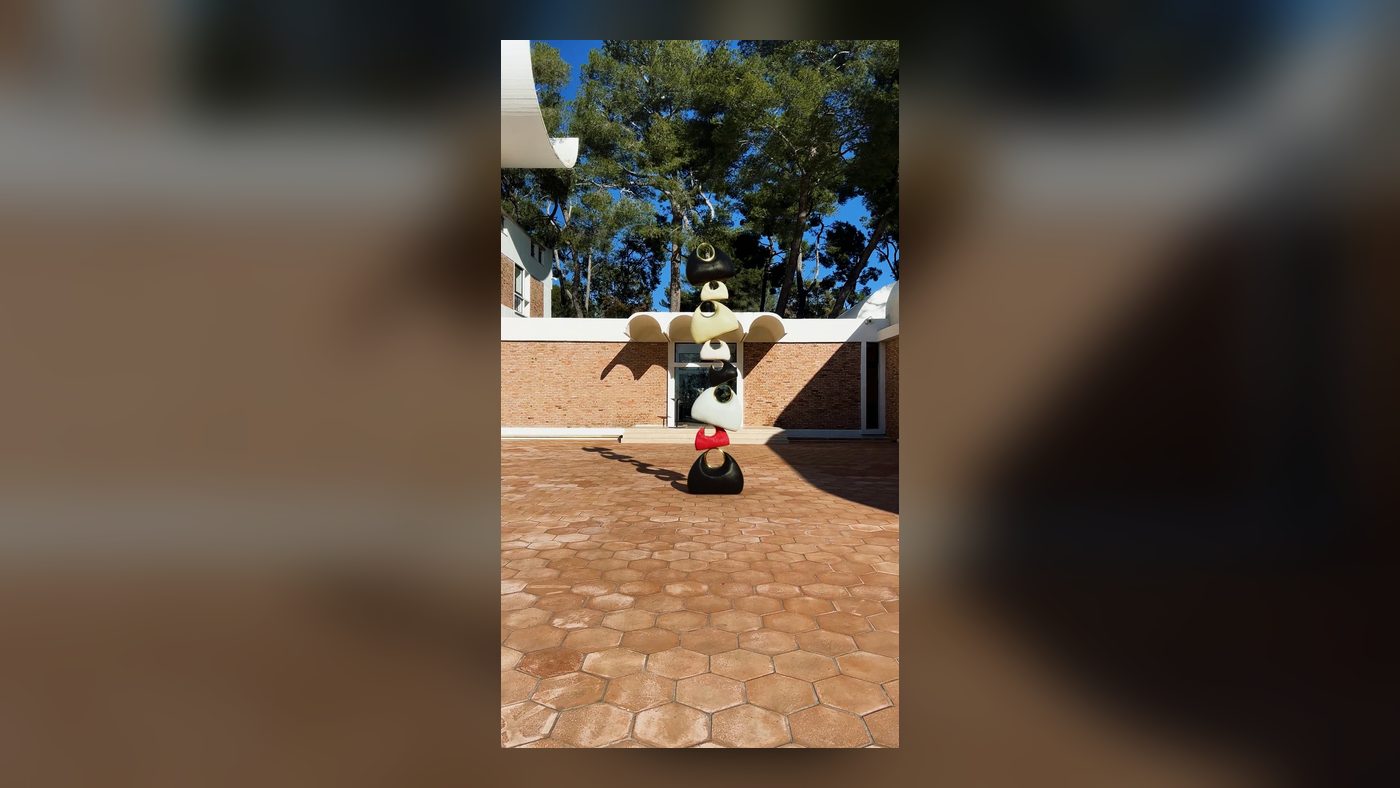 What is FOOH? Mixed reality CGI, explained for brands
FOOH, fake out of home, is the format where a giant product appears on a real street and nobody can tell it was never there. How it is made, why it travels, what it costs compared with a real installation, and when not to use it.
 AI UGC vs real UGC: what brands should actually buy in 2026
Generated creators are cheaper, faster and available in every language. Real creators are trusted. Here is how we decide which to use for a campaign, where CGI fits in the middle, and how to label AI content without killing performance.