
Trends
AI UGC vs real UGC: what brands should actually buy in 2026
Generated creators are cheaper, faster and available in every language. Real creators are trusted. Here is how we decide which to use for a campaign, where CGI fits in the middle, and how to label AI content without killing performance.

User-generated content, in advertising, means video that looks like a customer or creator made it on a phone: direct to camera, handheld, unpolished on purpose. It out-performs studio-looking ads in the feed because it does not look like an ad. In 2026 brands can buy it three ways: from real creators, from AI-generated creators, or from a mix of both with CGI in between. Here is how we choose.
Real UGC
A real person with a real opinion. It is the most trusted format and the slowest to scale: every creator has a rate, a schedule, a market and a language. For a hero testimonial, a founder story or anything where the audience will check who the person is, real is the answer. Use real creators when authenticity is the message.
AI UGC
A generated creator, directed in-house, delivering the same formats: unboxing, demo, get-ready-with-me, testimonial. It can be produced in dozens of variants, in any market and language, and revised in hours. Its weakness is trust: audiences are getting better at spotting it, and platforms increasingly require it to be labelled. Use AI UGC for volume, for testing hooks, for markets you cannot cover with a roster, and for products where the demonstration matters more than the demonstrator.
The middle: CGI-enhanced UGC
This is where a CGI studio earns its place. A real creator holds a product that transforms in their hand. An effect appears in the room. The background is not really there. It keeps the handheld trust of UGC while making the film impossible to scroll past, and it is the same compositing craft as our mixed-reality work at a smaller scale. When a client asks for 'UGC but memorable', this is usually the answer.
Labelling
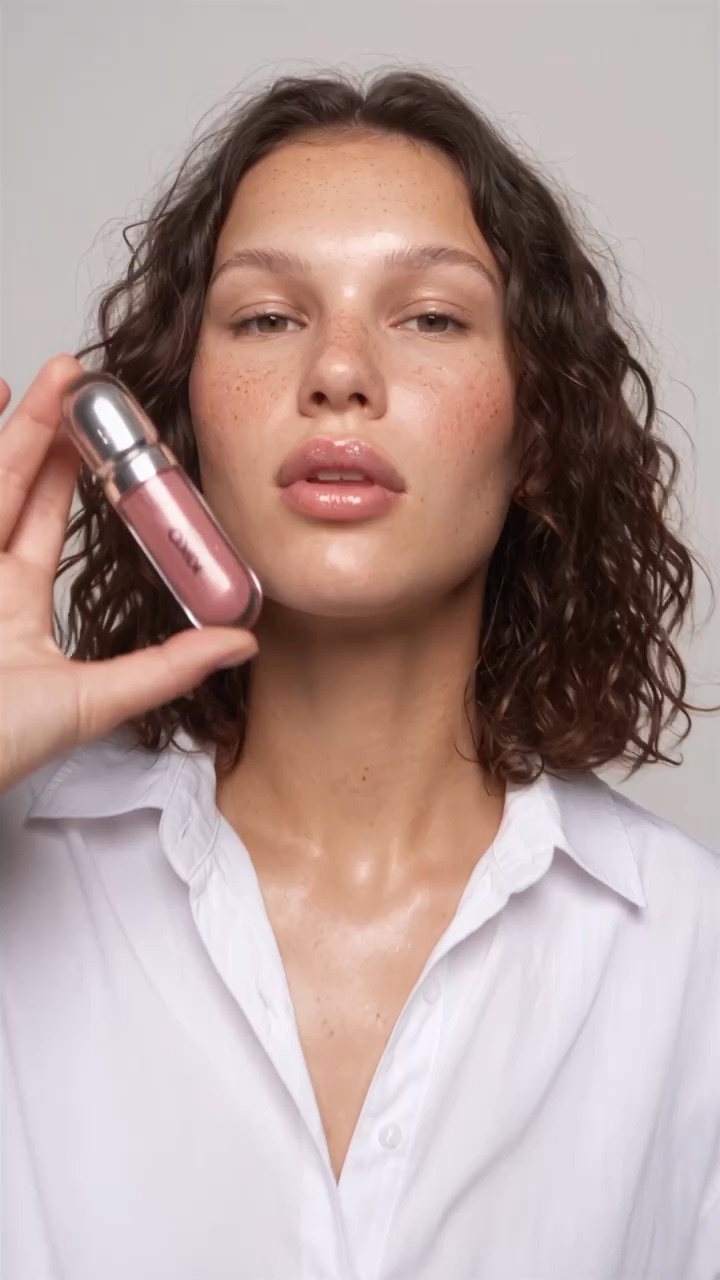
Label AI content. Not because it performs worse when labelled, but because unlabelled AI content that gets found out costs a brand more than any single campaign earned. Our own rule is simple: every film we release carries an AI flag or a 'no AI used' stamp, on the card and on the project page. Our AI films for Maybelline and KIKO Milano are marked as such, and they still get watched.

How to brief it
UGC is bought in batches, not singles: ten, twenty, fifty films with several hooks each, so there is enough to test. Send the product, the claims you are allowed to make, the markets, the platforms and the hooks that have worked before. Say up front whether real, AI or mixed is acceptable, and expect the studio to tell you which it would use and why.
More to read
Keep reading.
 The NYX giant inflatable duck: a real inflatable, a CGI landing and a QR code
How we built a NYX campaign around a giant inflatable duck: a real inflatable on the street, a CGI film of it flown in by helicopter, and a QR code linking both.
 How to choose a CGI studio (and what to ask before you sign)
Every CGI studio's reel looks good at reel speed. Here is how to tell which one will actually deliver your product film: the questions to ask, the files to request, the red flags, and what a fair quote should contain.
 What is FOOH? Mixed reality CGI, explained for brands
FOOH, fake out of home, is the format where a giant product appears on a real street and nobody can tell it was never there. How it is made, why it travels, what it costs compared with a real installation, and when not to use it.