
Explainers
How naked-eye 3D DOOH actually works
The billboard that seems to spill into the street is an old trick, anamorphosis, on a very new screen. What makes it work, why it only works from one spot, what to ask the media owner for, and why the social cut matters more than the screen.
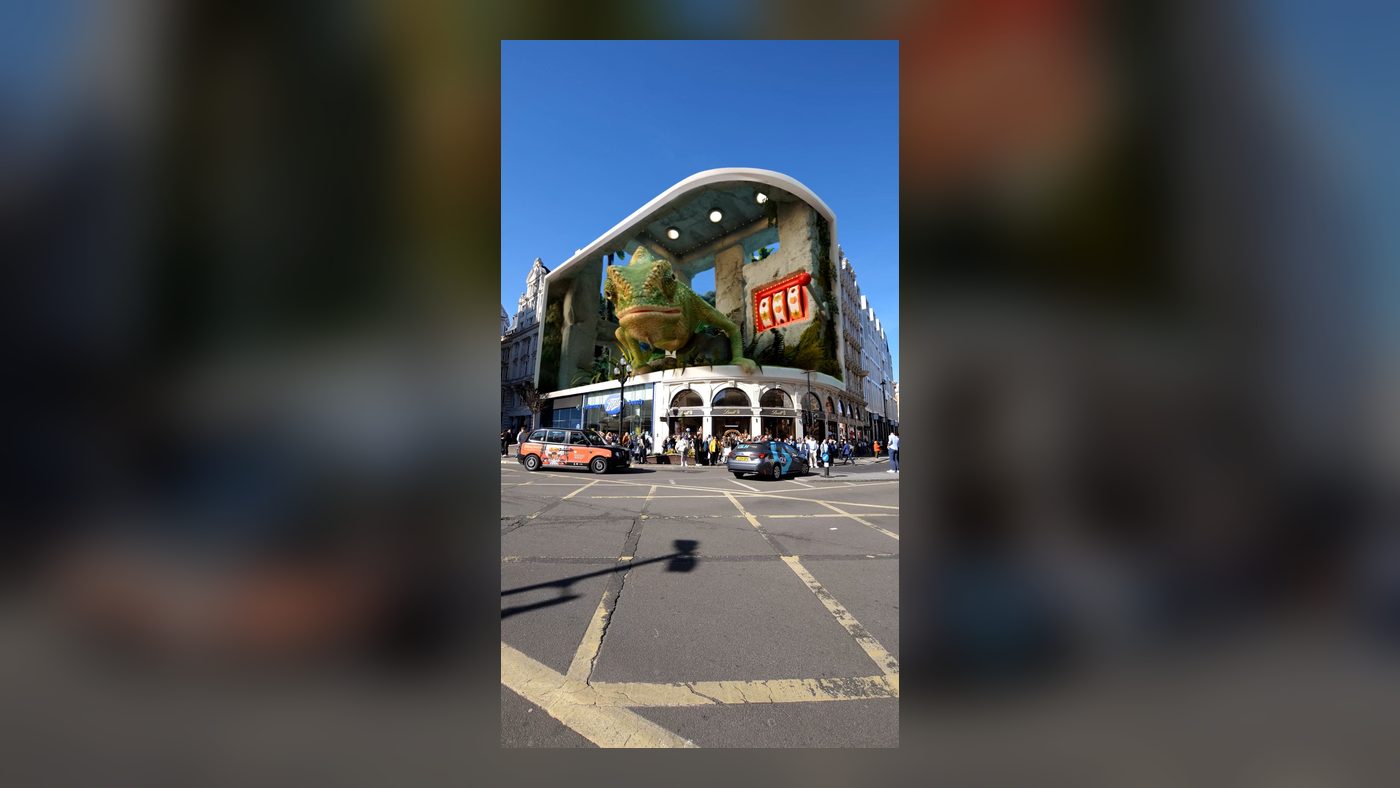
The cat that stretches out of a Tokyo screen, the wave that crashes into a Seoul square, the product that steps off a billboard in front of a crowd: naked-eye 3D DOOH is the most-shared thing in out-of-home, and it is built on a trick painters used in the 1500s. Anamorphosis: an image distorted so that it only looks right from one place.
Why the screen has to be a corner
Most naked-eye 3D screens wrap around a building's corner, or curve. That gives the illusion two planes to work with: the content draws a fake box whose edges line up with the real edges of the screen, and objects can appear to break out of that box. From the intended viewing spot the perspective locks and the object hangs in the air. From anywhere else the image looks stretched, which is why every film of one of these screens is shot from the same place.
Why it is a technical job first
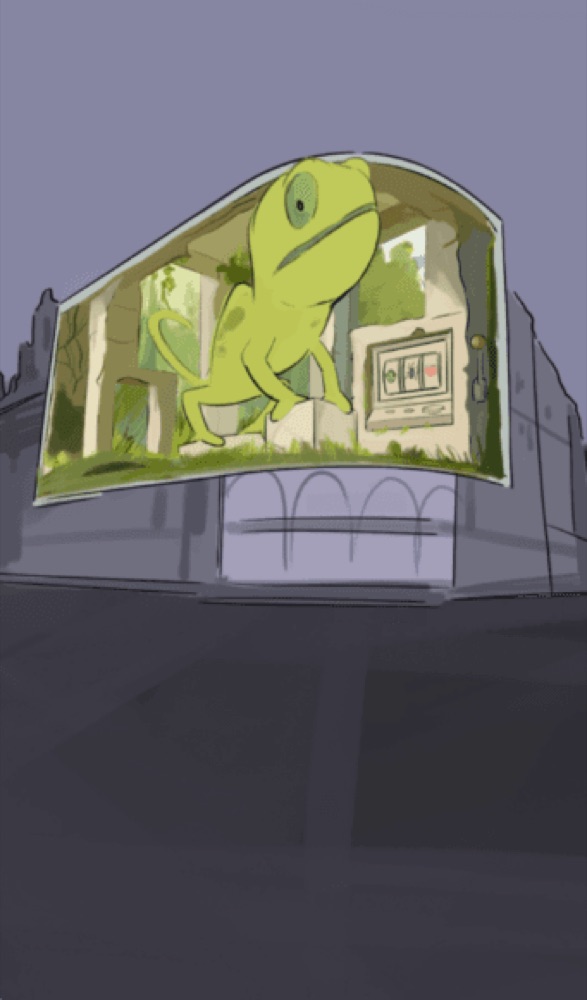
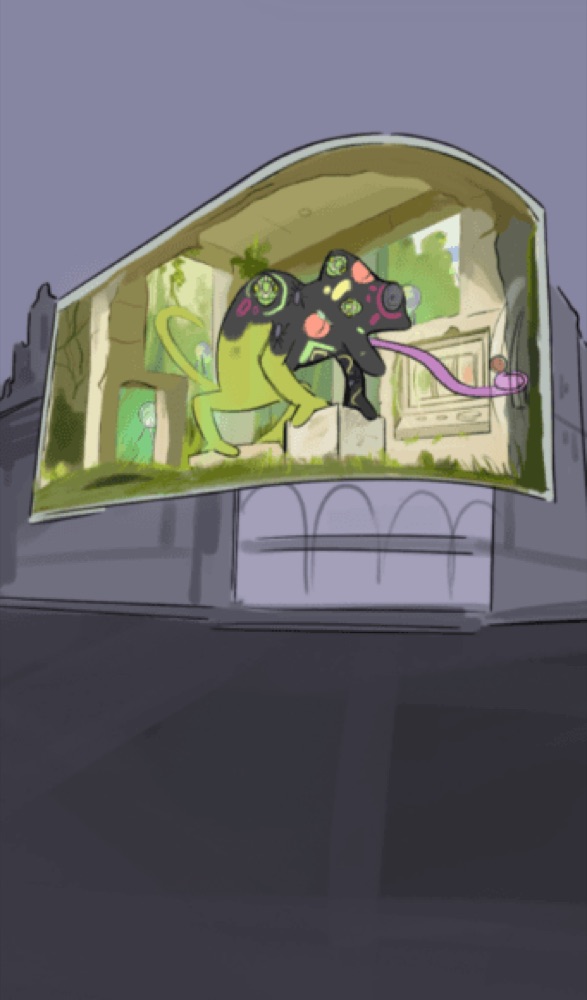
The content has to be built to the screen's exact geometry: its pixel map, the angle of the corner, the height above the street and the distance to where people stand. We rebuild the screen in 3D, set a camera where the crowd will be, and design the CGI in that camera. Only then does it get rendered flat, in the media owner's pixel map, frame rate and codec. Skipping that step is how a brand ends up with a beautiful film that looks wrong on the actual screen.
The social cut is the real media
Hundreds of people see the screen. Millions see the video of the screen. So every 3D DOOH job we do delivers two things: the screen file, and a mixed-reality cut that places the content into footage of the location, shot from the sweet spot. The second one is what travels, and it also lets a brand run the campaign in cities where there is no screen at all.
What to ask the media owner for
The pixel map and physical dimensions, a site photo from the main viewing position, the frame rate and codec spec, the approval process and the lead time. Three to six weeks is normal for a single screen; multi-screen buys take longer because every screen is a different shape. Our immersive 3D work, including our own naked-eye film, is on the projects page under Immersive.
More to read
Keep reading.
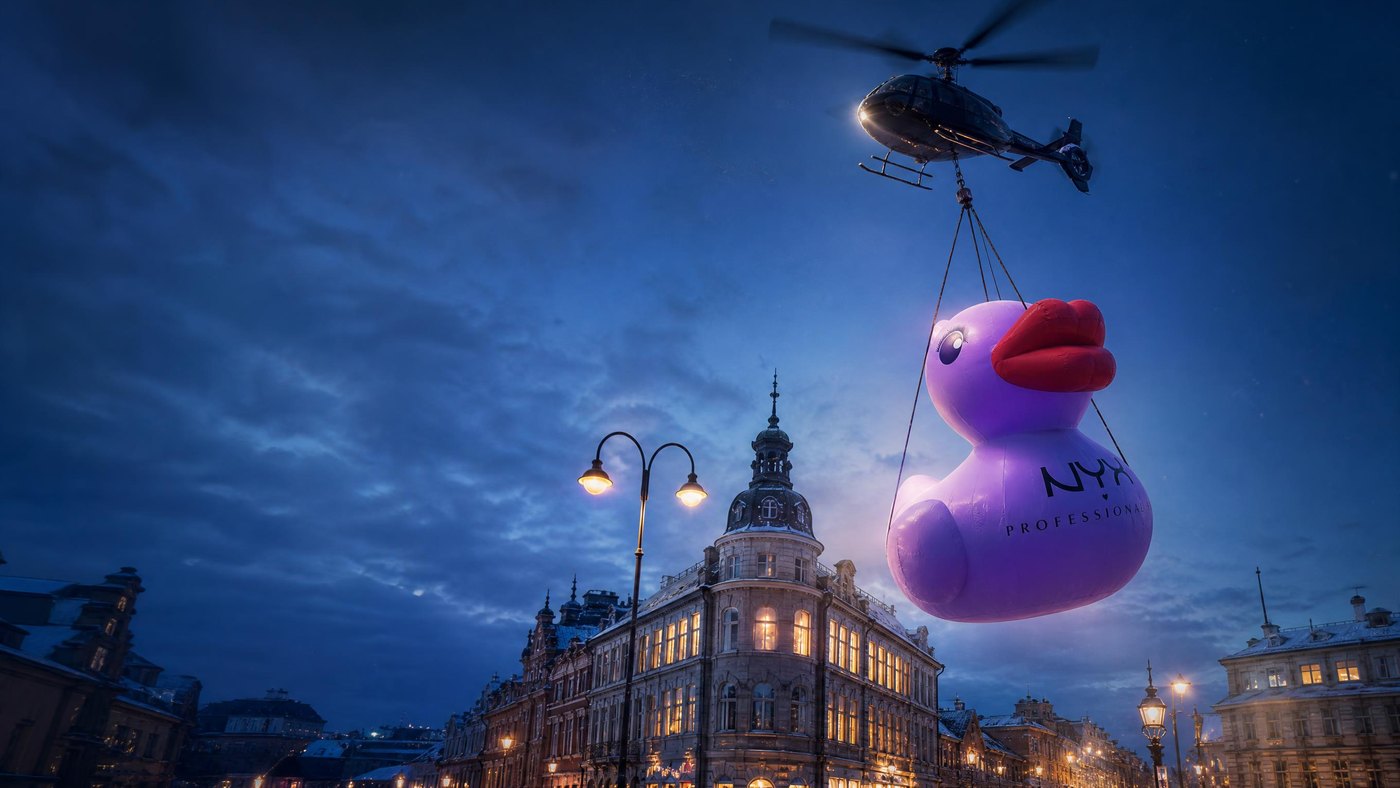 The NYX giant inflatable duck: a real inflatable, a CGI landing and a QR code
How we built a NYX campaign around a giant inflatable duck: a real inflatable on the street, a CGI film of it flown in by helicopter, and a QR code linking both.
 How to choose a CGI studio (and what to ask before you sign)
Every CGI studio's reel looks good at reel speed. Here is how to tell which one will actually deliver your product film: the questions to ask, the files to request, the red flags, and what a fair quote should contain.
 What is FOOH? Mixed reality CGI, explained for brands
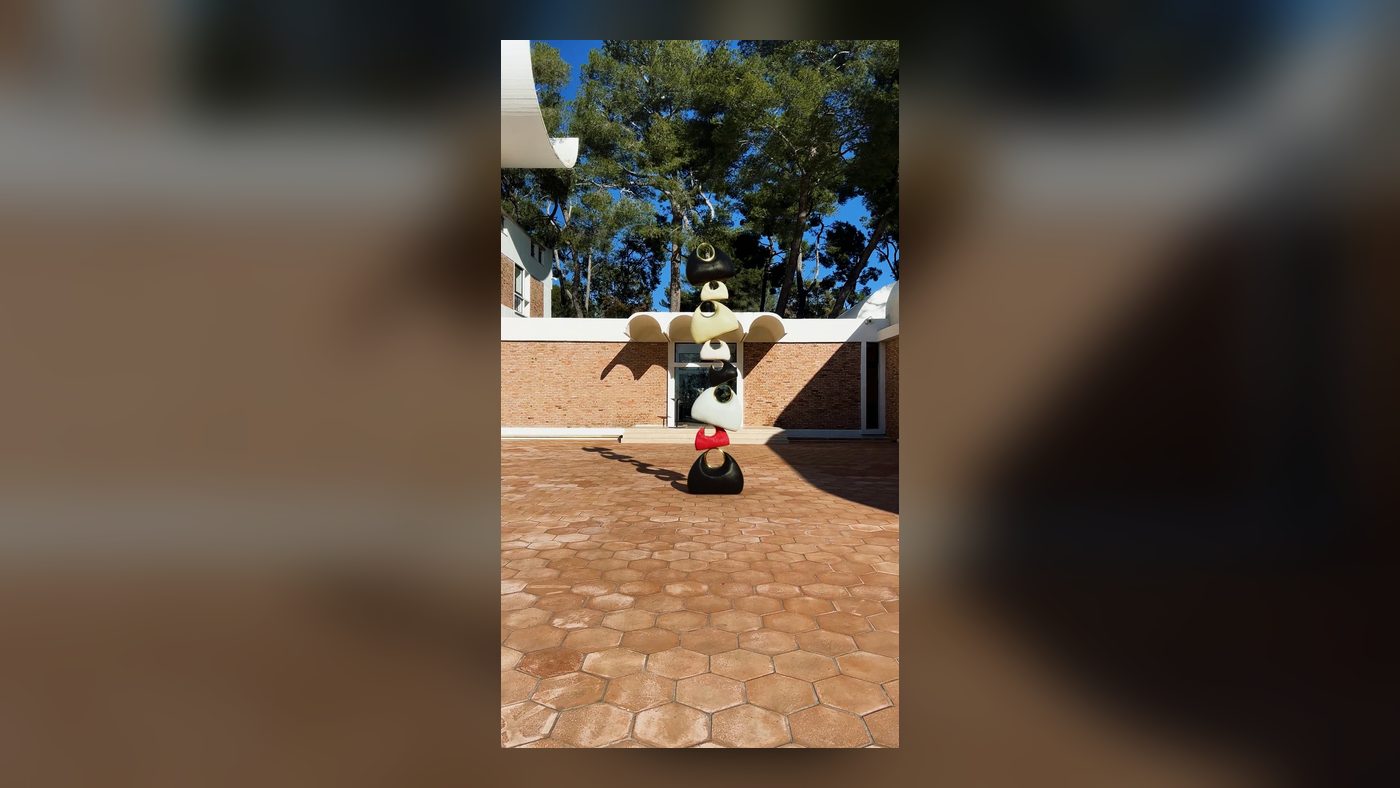
FOOH, fake out of home, is the format where a giant product appears on a real street and nobody can tell it was never there. How it is made, why it travels, what it costs compared with a real installation, and when not to use it.