A moody dusk photograph of a narrow cobblestone alleyway lined with red brick Georgian buildings and a glowing street lamp, evoking an atmospheric European city streetscape.

7 November

·

10 min read

Case Study: Guinness

At WHY CGI, we believe viral success is never by chance. It’s built on storytelling instincts, technical precision and understanding what makes people feel something, even for just a few seconds. Our Guinness project is one of the best examples of that formula in action.

Guinness × WHY: When CGI Meets Viral Magic


Over the years, we’ve produced dozens of Mixed Reality projects, and along the way, we’ve learned what really grabs people’s attention, what makes them share, and what keeps them watching till the end.

Our Guinness video is one of the best examples of that formula in action.
It reached over 300 million organic views across platforms, generated millions of likes, shares and comments, and was featured by top media outlets and creators worldwide - including CNBC Brazil, which highlighted it as a case study of how fast the CGI industry is growing.

So what made this one take off? Let’s break it down.

1. The Hook

In short-form storytelling, the first three seconds are everything.
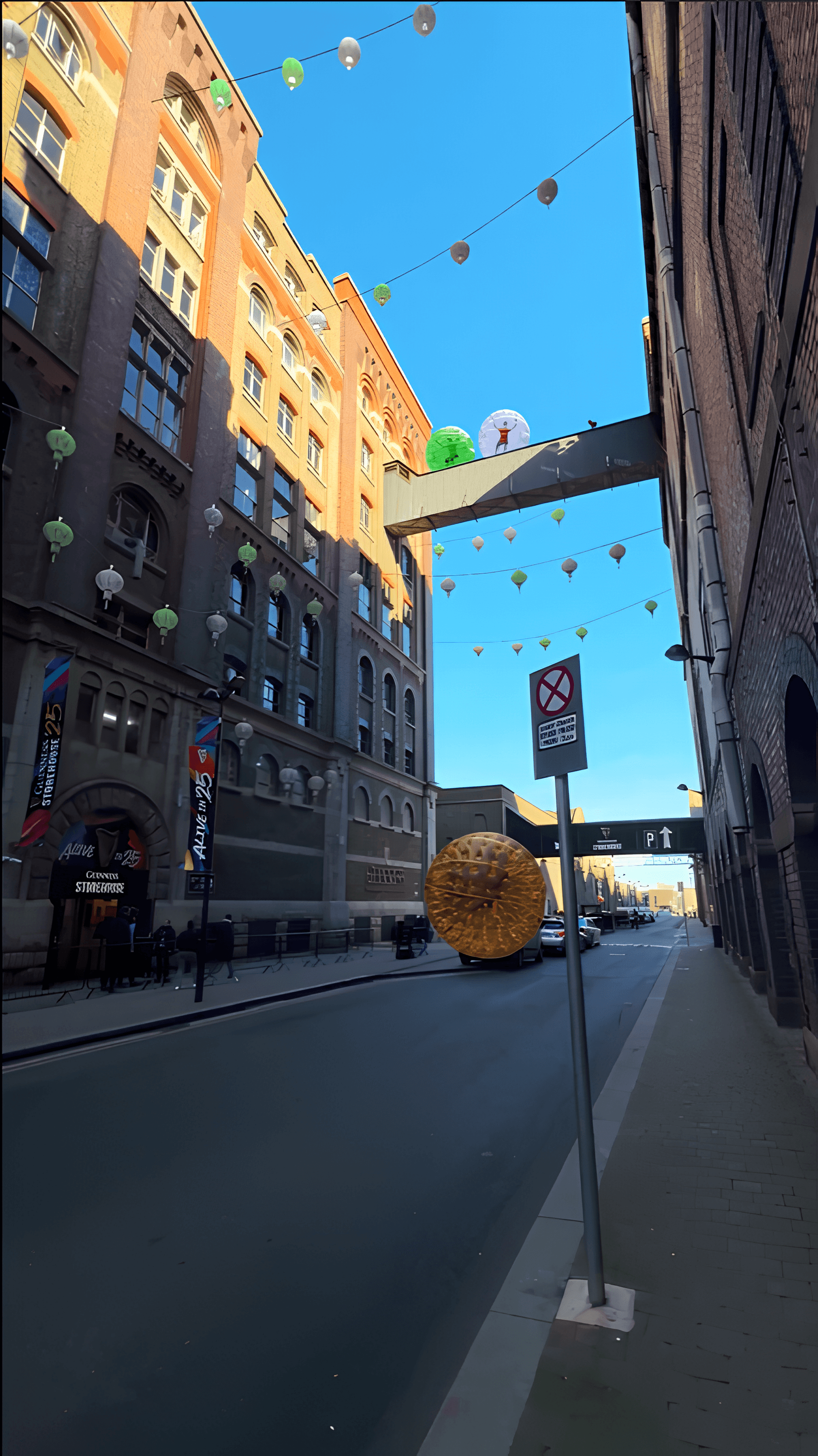
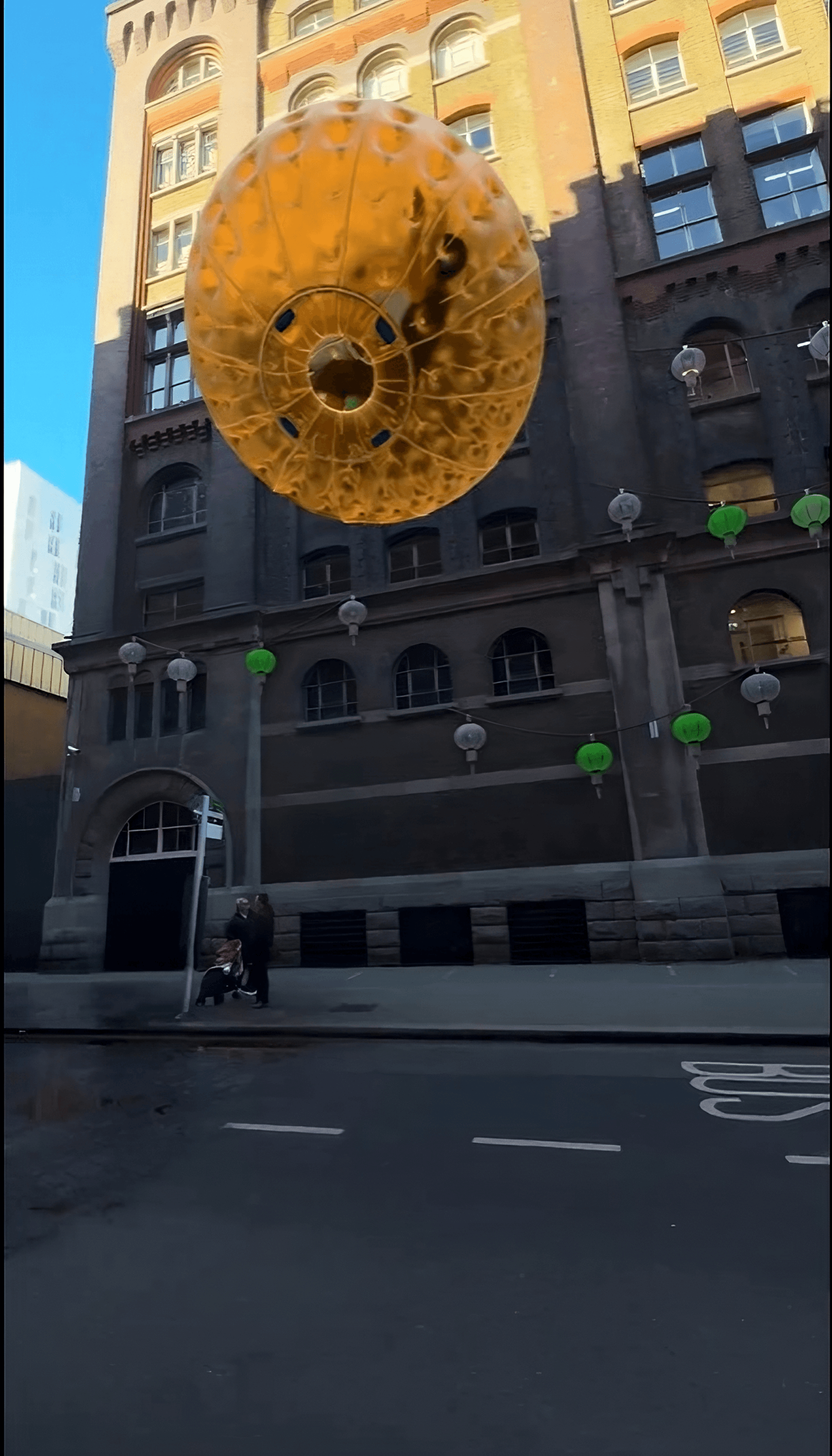
We opened the scene with a zorb ball perched on top of a building - an unexpected, slightly absurd image that instantly triggers curiosity:

“Wait, what’s going to happen next?”

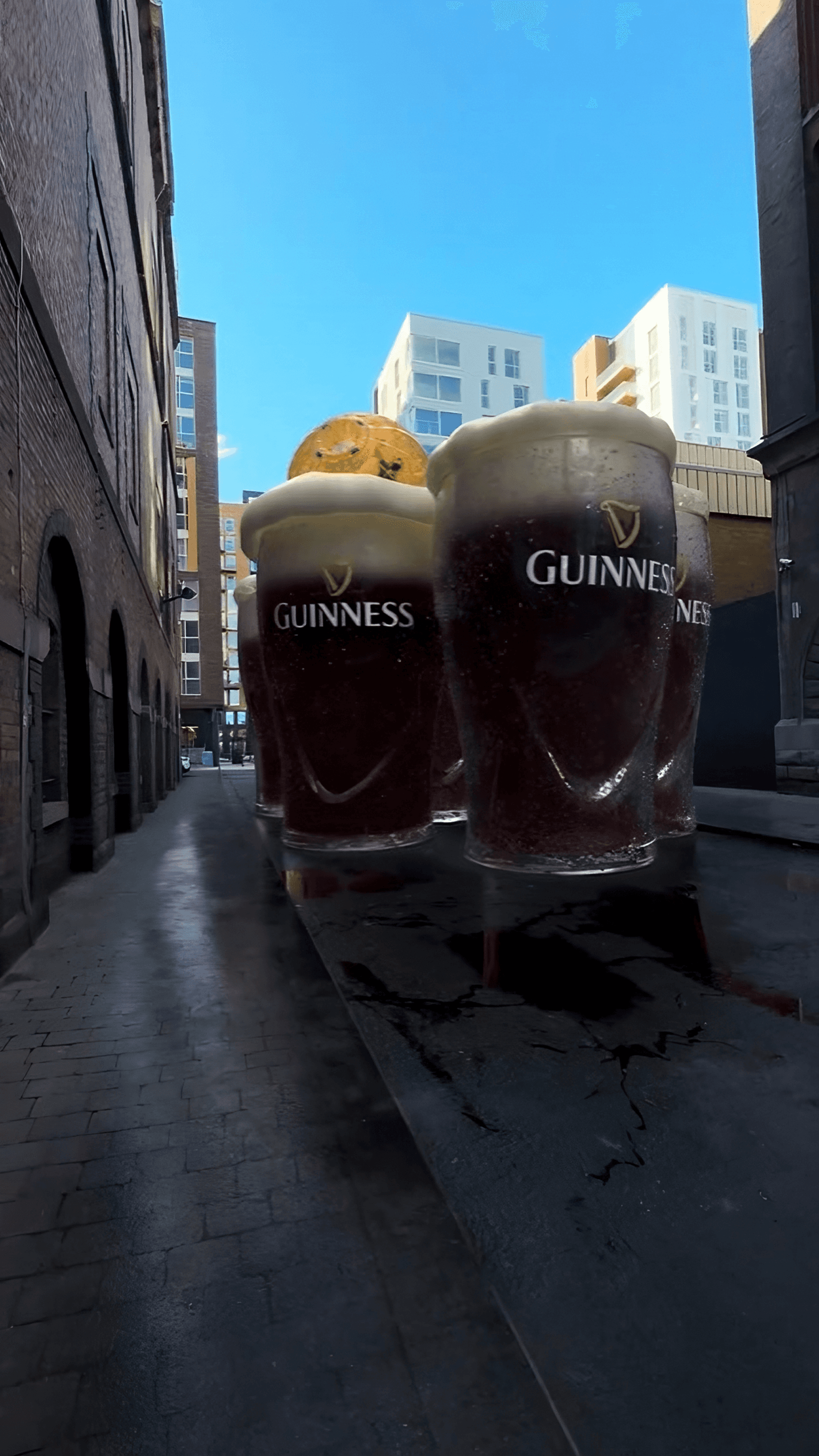
That moment of curiosity is powerful. It buys you time before it’s going to be scrolled by. And when the ball finally drops, it leads to a wild beer pong game with giant Guinness pints.

Lady Gaga playing piano

2. Relatable Through Interaction

One reason WHY CGI videos go viral is that we always include people interacting with the CGI environment.
It makes the story feel relatable, something you can imagine yourself in.
That’s why comments often sound like:
“We need to try this.”
“Every Friday be like”

Even in this video, the people inside the zorb balls were fully CG, but crafted with such precision that most viewers never noticed. That’s the magic of visual believability. It blurs the line between digital and real.

3. The Details That Make It Real

The realism didn’t happen by accident.
Our team spent weeks perfecting the smallest details: the foam, the condensation, the lighting, even how droplets ran down the glass.
These micro-moments make the scene feel touchable and keep people watching it again and again, replaying to decide whether it’s real or not.

The foam simulations actually took so long to perfect that “rendering” felt like the project’s permanent state. As our CG team joked:

“Whenever someone asked, ‘What’s up with Guinness?’ our answer was always the same - it’s rendering.

4. A Brand People Already Love

Familiarity brings engagement.
Seeing a brand as iconic as Guinness in a playful, unexpected setting makes people stop, smile and share.
It’s instantly recognizable, yet completely out of familiar context - the perfect viral combination.

Lady Gaga playing piano

5. Format That Fits the Feed

The video is short, punchy and built for today’s world of short-form content.
In the reality of endless scrolling, compact storytelling always wins.

Behind the Scenes

The final concept was born from an accidental find.
Creator on the project recalls:

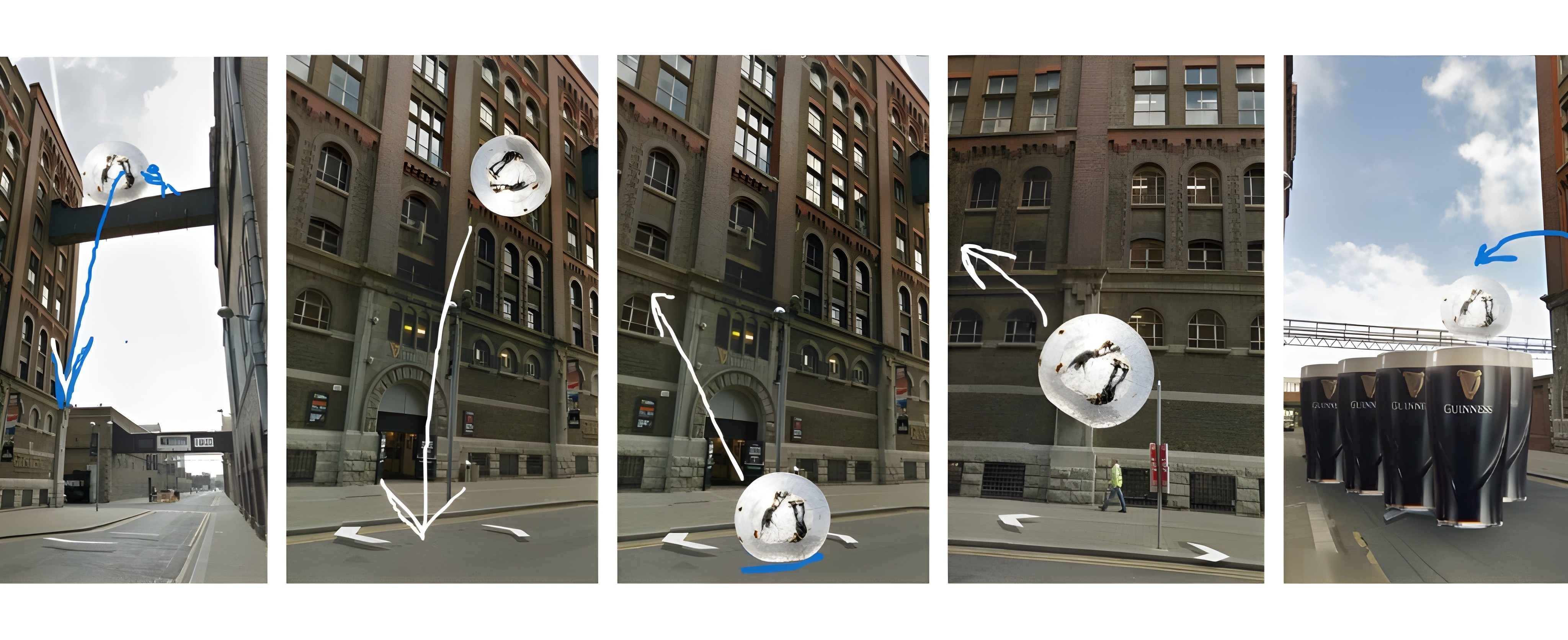
“We had a few fun ideas for Guinness x St. Patrick’s Day so I was looking for inspo and possible shooting places. I found the location while walking around Dublin on Google Maps, searching for a good spot. I saw the Guinness factory nearby and this cool overpass where the balls could fall - it just clicked instantly. I built the layout from screenshots, and everything got approved quickly. The concept just felt right to everyone on the team”

The scene was created near Guinness’s iconic Dublin storage site - a nod to the brand’s heritage and home.

Results

  • 300M+ organic views across platforms


  • Millions of shares and comments


  • Featured by major media outlets and leading creators


  • Highlighted by CNBC Brazil as an example of CGI industry growth

WHY CGI